

- Jul 5, 2019
And another chart that might help clear up grade vs viscosity. In this case, it's Castrol synthetic 0W-30 compared to 10W-30. Some people think the '0W' means it's too thin and won't offer good protection. In reality, this oil offers much better protection because it's thicker than their 10W-30 at 100C, while substantially thinner when cold:
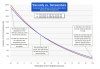
This is the beauty of a multi-weight oil that offers a high viscosity index (VI). The ability of the oil to stay in it’s grade across a broad range of operating temperatures is known as the oil’s viscosity index. A higher viscosity index number means the oil better maintains it’s weight and tends to be more stable across a broad range of temperatures.
A 5W-30 will typically have a higher VI than a 10W-30. It pumps easier and will build pressure faster than the 10W-30, while also being a grade 30 weight oil at temperature. Thinking a '0W' or '5W' engine oil means it is 'too thin' is a mistake. Oil is always thicker when cold, but these grades are not nearly as thick as the 10W-30 when cold, and can even be slightly thicker at operating temp.
This is the beauty of a multi-weight oil that offers a high viscosity index (VI). The ability of the oil to stay in it’s grade across a broad range of operating temperatures is known as the oil’s viscosity index. A higher viscosity index number means the oil better maintains it’s weight and tends to be more stable across a broad range of temperatures.
A 5W-30 will typically have a higher VI than a 10W-30. It pumps easier and will build pressure faster than the 10W-30, while also being a grade 30 weight oil at temperature. Thinking a '0W' or '5W' engine oil means it is 'too thin' is a mistake. Oil is always thicker when cold, but these grades are not nearly as thick as the 10W-30 when cold, and can even be slightly thicker at operating temp.


