• Has your topic been discussed? Check this quick video for search tips. You answer/info might already be waiting!

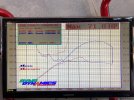
All 650's Power Levels!

NUTSACK

2020
CB650R ABS
Oct 14, 2020
Riding Since
2020
yeah, from 49 to 86hp must feel like a different bike! how do you like the akra? wondering about pulling the trigger...thx
Ye it feels like a proper bike now, i was surprised by how restricted it actually was..The Akra is very loud without the baffle but sounds good. I’d prefer it slightly quieter but I’ll live with it.
Here’s the Dyno graph below and if was to get over 60 nm I’d be even happier..I’m not sure if it will loosen up over time or if I could get more power from running premium 98 fuel but time will tell as it’s only done 1000km so far..
 

Attachments

  • 88251694-05A6-46B7-B57D-CDBF5F1515FB.jpeg
    88251694-05A6-46B7-B57D-CDBF5F1515FB.jpeg
    192.2 KB · Views: 81

NUTSACK

2020
CB650R ABS
Oct 14, 2020
Riding Since
2020
over 100hp at the wheel? must be a LOT of stickers...LOL 😂
No it shows 95 at the wheel in that graph..it would take engine power to approx 110.. I think that’s a streeetch..
 

Itchytoe

2018
CB650F
Dec 15, 2019
Running a higher octane fuel in an engine that wasn't designed for it won't help you. Octane rating isn't a measure of available power in a fuel. It's a measure of the fuel's resistance to ignition. Basically, a higher octane rating means the fuel is harder to burn. That might sound crazy, but it is done to allow higher compression ratios and more advanced timing without having problems with the fuel igniting before the spark, or before the piston reaches the top of its stroke (knock). If your engine wasn't designed for the higher octane rating, it can't physically make use of that extra octane rating. Another counterintuitive fact is that higher octane fuel actually has less available energy in it than its lower octane counterparts. What high octane fuels do have more of is detergents. If you normally run very dirty fuel, a couple of tanks of premium can help clean things out. (But I'm pretty skeptical of just how much good that will actually do for you in a modern decently maintained engine.)
 

NUTSACK

2020
CB650R ABS
Oct 14, 2020
Riding Since
2020
I’m not sure what octane these engines are designed for or even that they design them around fuel octane, but I’m running regular 91 at the moment and that’s what it was tuned on..all cars I have owned have run on premium 98 and tuned on that, I think there is a difference but how much I’m unsure..
 

Brammers

2014
CBR650F ABS
Staff
May 30, 2014
Hampshire, England
Riding Since
1993
If you tune an engine for higher octane you get better performance, but just using better fuel gets you next to nothing.

Start mixing nitro in though (custom mixes) changes things a bit more - but again, you're deep into "special circumstances" now :)

86hp and 45 torque is pretty good! Nice job.

J
 

JH09

2019
CB650R ABS
Jul 29, 2020
Riding Since
2010
Running a higher octane fuel in an engine that wasn't designed for it won't help you. Octane rating isn't a measure of available power in a fuel. It's a measure of the fuel's resistance to ignition. Basically, a higher octane rating means the fuel is harder to burn. That might sound crazy, but it is done to allow higher compression ratios and more advanced timing without having problems with the fuel igniting before the spark, or before the piston reaches the top of its stroke (knock). If your engine wasn't designed for the higher octane rating, it can't physically make use of that extra octane rating. Another counterintuitive fact is that higher octane fuel actually has less available energy in it than its lower octane counterparts. What high octane fuels do have more of is detergents. If you normally run very dirty fuel, a couple of tanks of premium can help clean things out. (But I'm pretty skeptical of just how much good that will actually do for you in a modern decently maintained engine.)
you know your stuff. i like to run ethanol-free gas in my bike. i think the octane is 89. do you think it makes a difference in anything? just looking for slightly better MPG. manual says 86 is fine for my year. thx
 

Itchytoe

2018
CB650F
Dec 15, 2019
you know your stuff. i like to run ethanol-free gas in my bike. i think the octane is 89. do you think it makes a difference in anything? just looking for slightly better MPG. manual says 86 is fine for my year. thx
Ethanol has less energy than gasoline, so mixtures of gasoline and ethanol will have a little less energy in them too. The ethanol free gasoline might give you slightly better fuel economy than 10% ethanol because you use less fuel to get the same power output. Typically ethanol-free gasoline is more expensive than the blended stuff. If you use ethanol-free gasoline, your miles per gallon might go up a little bit, but your miles per dollar certainly won't. In the end, increasing MPG is really about increasing miles per dollar right?

If I remember correctly, ethanol has about 30% less energy, so that's 3% less energy in an E10 blend. So maybe 3% better fuel economy. At 45 mpg average with ethanol, 3% would mean you could get 46.4 mpg with "pure" gasoline. You'd get a bigger mpg boost by not twisting the throttle as quickly, reducing your speed by like 1 or 2 mph, or by engine braking sooner instead of rolling off the throttle and onto the brakes, etc.

Ethanol can cause problems in older engines that use components that aren't ethanol safe. But even then, it's not actually the engine that has problems. It's hoses and o-rings and gaskets that can fail for various ethanol related reasons. The engine will burn it just fine.

Like Brammers said above, tuning the engine to make use of higher octane ratings can definitely get you better performance from those fuels. That's the result of being able to advance the timing with the new tune. I'm a bit skeptical about how useful that is in the real world since you can just add a tooth or two to your rear sprocket and get basically the same effect. If you aren't chasing that last tenth of a second on your lap times, just change your sprockets. It's so much easier, cheaper, and safer than messing with your engine's tuning. You can do catastrophic damage to an engine with a bad tune. Heck, a -1 front sprocket change will have a bigger impact on how your bike rides than most tuning and front sprockets are like $20. You'll never find a custom tune that cheap. I bet a -2 front sprocket will be better than any custom tune short of making physical modifications to the engine, like camshafts and superchargers.
 

North Oz

2019
CBR650R ABS
Feb 13, 2021
Darwin
Riding Since
2020
I've just received the outcome from throwing my 2019 cbr650r on the dyno - yet to pick it up but can't wait :cool:. I'm told the 71.8 hp on the Aussie dyno converts to 82.5 on the dyno jet. i run 98 octane only and that's what they dyno tuned with. Also, it was done locally to local conditions i.e we only have 2 seasons here: 6 months of the year is 36 degrees Celsius and 98% humidity and the other 6 months is 32 degrees Celsius and 80% humidity. I've been told this can make a considerable difference to real world hp?
 

Attachments

  • IMG_6560.jpg
    IMG_6560.jpg
    250.7 KB · Views: 44

miweber929

2014
CBR650F
650 Alumnus
Staff
Feb 13, 2015
Woodbury, MN
Riding Since
1975
I've been told this can make a considerable difference to real world hp?
Absolutely will affect how much power your bike will make. Not gigantic, but will make a difference.

I am curious about the “Aussie dyno” number vs. a “DynoJet” number statement. A dynamometer is a tool that provides a measurement of power, it’s like saying an SK Tools 10Nm torque wrench setting is different than a Snap On 10Nm which is different than a Craftsman 10Nm wrench. If it’s set to 10Nm on the wrench, it should measure 10Nm. My guess is their dyno reads low and rather than getting it recalibrated or putting in a correction factor they just call it good by saying it’s an “Aussie” dyno reading.
 

Ive

2020
CBR650R ABS
May 13, 2020
USA
I am curious about the “Aussie dyno” number vs. a “DynoJet” number statement. A dynamometer is a tool that provides a measurement of power, it’s like saying an SK Tools 10Nm torque wrench setting is different than a Snap On 10Nm which is different than a Craftsman 10Nm wrench. If it’s set to 10Nm on the wrench, it should measure 10Nm. My guess is their dyno reads low and rather than getting it recalibrated or putting in a correction factor they just call it good by saying it’s an “Aussie” dyno reading.
Although quantifiable, the metrics used by dynamometers to measure power and torque differ between dyno manufacturers, even here in North America. As a Honda guy and enthusiast of Golden Era Hondas, I've worked on, and modifed Honda engines (mostly B-series, but now now K-series), and you'd be surprised at the different numbers the same car can produce on the same day and temperature/humidity, with a DynoJet dyno (most common here), versus a Mustang dyno - the latter reading about ~10% lower values.

Not sure what brand/kind of dyno an "Aussie dyno" might use, but in the world of dynos used for tuning, there's always an element of subjectivity in the numbers.
 
Last edited:

miweber929

2014
CBR650F
650 Alumnus
Staff
Feb 13, 2015
Woodbury, MN
Riding Since
1975
Not sure what brand/kind of dyno an "Aussie dyno" might use, but in the world of dynos used for tuning, there's always an element of subjectivity in the numbers.
True, however the bolded statement would lend you to believe that it's not an exact number, yet this guy's dyno operator had a specific value between the two and a dyno by definition is a measurement tool. They all have a "correction" variable they are to apply in the software to the output readings that make them accurate or you just have 2 rulers that have different graduations and the board you need to cut to 5' using one ruler is actually 4'7" because you used another inaccurate "ruler".

Dynomometer Wiki:


My good friend works for these guys and designs the electrical systems for their dynomometers:


They own TON of dyno companies and build all sorts of them, I have worked with him on a few small projects in the past.
 

Ive

2020
CBR650R ABS
May 13, 2020
USA
True, however the bolded statement would lend you to believe that it's not an exact number, yet this guy's dyno operator had a specific value between the two and a dyno by definition is a measurement tool. They all have a "correction" variable they are to apply in the software to the output readings that make them accurate or you just have 2 rulers that have different graduations and the board you need to cut to 5' using one ruler is actually 4'7" because you used another inaccurate "ruler".
And what I bolded in your statement therein lies the crux: the correction factors in the software are not always the same, and thus net different results between manufacturers.

To use a different blunt example: 1 US gallon is different than 1 Imperial gallon, even though they both use "gallon" as a measure of fluid volume.

Edit: I just looked up info on a Dynotech dyno (from Aussie manufacturer Dyno Dynamics, and possibly the one North Oz @North Oz ran on), and the variances in their readings are even greater than that of a Mustang dyno, so the difference in their output numbers compared to a much higher-reading DynoJet dyno, are even more pronounced.
 
Last edited:

miweber929

2014
CBR650F
650 Alumnus
Staff
Feb 13, 2015
Woodbury, MN
Riding Since
1975
And what I bolded in your statement therein lies the crux: the correction factors in the software are not always the same, and thus net different results between manufacturers.

To use a different blunt example: 1 US gallon is different than 1 Imperial gallon, even though they both use "gallon" as a measure of fluid volume.

Edit: I just looked up info on a Dynotech dyno (from Aussie manufacturer Dyno Dynamics, and possibly the one North Oz @North Oz ran on), and the variances in their readings are even greater than that of a Mustang dyno, so the difference in their output numbers compared to a much higher-reading DynoJet dyno, are even more pronounced.
The correction value is a variable, and it supposed to be changed when needed to give it an accurate measurement. Whether you should calibrate hourly, daily, weekly, monthly, annually, etc. I do not know, and it would depend on how often your unit goes out of accuracy. But I do know that is the variable you set to calibrate the dyno.

Your example doesn't work because it's not two like units. A horsepower is a factual, incremental unit, the same value no matter where you are. An imperial gallon and a US gallon are not the same; a Mustang Dyno HP is not different than a DynoJet HP.
 

Ive

2020
CBR650R ABS
May 13, 2020
USA
The correction value is a variable, and it supposed to be changed when needed to give it an accurate measurement. Whether you should calibrate hourly, daily, weekly, monthly, annually, etc. I do not know, and it would depend on how often your unit goes out of accuracy. But I do know that is the variable you set to calibrate the dyno.

Your example doesn't work because it's not two like units. A horsepower is a factual, incremental unit, the same value no matter where you are. An imperial gallon and a US gallon are not the same; a Mustang Dyno HP is not different than a DynoJet HP.
You missed my point on the gallon example. As for your last statement, the values it produces, despite software correction, has always been different between the two, even though they are both inertia-style dynos and would happen to be calibrated on the same day.

I am curious about the “Aussie dyno” number vs. a “DynoJet” number statement.
This was your original statement. And as you were curious, I offered an explanation, seeing as I've had experience with those different types of dynos. Whether or not you choose to believe what is, versus what should be (I'm not aurguing with you on the latter) - in this context of dyno-use for tuning - is entirely up to you and I'll leave it at that.

Happy Friday! :)
 

North Oz

2019
CBR650R ABS
Feb 13, 2021
Darwin
Riding Since
2020
Hopefully I pick up the bike today so I will discuss the dyno results further with the mechanic. All I know is he multiplied the Hp result by a factor of 1.15 - and why this correction is applied
 

skeletor

2015
CBR650F ABS
Dec 13, 2018
You missed my point on the gallon example. As for your last statement, the values it produces, despite software correction, has always been different between the two, even though they are both inertia-style dynos and would happen to be calibrated on the same day.


This was your original statement. And as you were curious, I offered an explanation, seeing as I've had experience with those different types of dynos. Whether or not you choose to believe what is, versus what should be (I'm not aurguing with you on the latter) - in this context of dyno-use for tuning - is entirely up to you and I'll leave it at that.

Happy Friday! :)
So there is no standard and they are all also trying to simulate different external variables that make calibration between machines impossible? (since none of them measure HP at the wheel alone it seems)
 

miweber929

2014
CBR650F
650 Alumnus
Staff
Feb 13, 2015
Woodbury, MN
Riding Since
1975
You missed my point on the gallon example.

What was your point then if I missed it? An imperial gallon is a different unit of measure than a US gallon, that’s a factual statement. It’s like saying a 1 meter is different than 1 inch, they are because they completely different units of measure; just because they have the term “gallon“ in them doesn't make them comparable. If one dyno is measuring brake horsepower rather than straight horsepower, now you have something.

A dyno is something that measures horsepower, a constant unit of measure. I get that two dynos are not usually the same: I state that every time people get comparing dyno sheets because I’m very familiar with dynos, their designs, their operations and the pitfalls that go along with using them. My friend that I’ve known 30+ years has worked 15+ years for a company that makes and designs dynos his extended family owns and he designs the controller systems for them, installs and calibrates them. I’ve also done some work for them in the past when I lived nearby and spent a lot of time watching the process; that’s why I linked the Power Test website. This is a subject I have more knowledge of than the average person.

As for your last statement, the values it produces, despite software correction, has always been different between the two, even though they are both inertia-style dynos and would happen to be calibrated on the same day.

The two dynos “should” come up with the same reading if both are accurately measuring what they are designed to measure. That’s where a correction factor variable should come into play. The truth of the matter is if you measure something using two different tools that are supposedly using the same scale, but get two different results, one or the other, or both, are not accurate. I’m not arguing there wouldn’t be a difference, but 72 hp vs. 82 hp is a big difference unless you’re using two different scales.

This was your original statement. And as you were curious, I offered an explanation, seeing as I've had experience with those different types of dynos. Whether or not you choose to believe what is, versus what should be (I'm not aurguing with you on the latter) - in this context of dyno-use for tuning - is entirely up to you and I'll leave it at that.

I get it, and appreciate the discussion. I absolutely accept what you’re saying and accept they are different readings, that’s not abnormal, but what I was commenting on was the operator telling the owner it’s low because it’s an “Aussie dyno“ and it would be around 15% higher on a “Dyno Jet“ which shouldn’t make sense unless they were using different units of measure or their dyno was highly inaccurate. The fact there’s a difference is not at all surprising, but the fact the operator had a specific number, and a high one, is.

Happy Friday!

Well, I guess I didn’t see this until Saturday but Happy Saturday to you as well!!
 

Ive

2020
CBR650R ABS
May 13, 2020
USA
So there is no standard and they are all also trying to simulate different external variables that make calibration between machines impossible? (since none of them measure HP at the wheel alone it seems)

What was your point then if I missed it? An imperial gallon is a different unit of measure than a US gallon, that’s a factual statement. It’s like saying a 1 meter is different than 1 inch, they are because they completely different units of measure; just because they have the term “gallon“ in them doesn't make them comparable. If one dyno is measuring brake horsepower rather than straight horsepower, now you have something.

A dyno is something that measures horsepower, a constant unit of measure. I get that two dynos are not usually the same: I state that every time people get comparing dyno sheets because I’m very familiar with dynos, their designs, their operations and the pitfalls that go along with using them. My friend that I’ve known 30+ years has worked 15+ years for a company that makes and designs dynos his extended family owns and he designs the controller systems for them, installs and calibrates them. I’ve also done some work for them in the past when I lived nearby and spent a lot of time watching the process; that’s why I linked the Power Test website. This is a subject I have more knowledge of than the average person.


The two dynos “should” come up with the same reading if both are accurately measuring what they are designed to measure. That’s where a correction factor variable should come into play. The truth of the matter is if you measure something using two different tools that are supposedly using the same scale, but get two different results, one or the other, or both, are not accurate. I’m not arguing there wouldn’t be a difference, but 72 hp vs. 82 hp is a big difference unless you’re using two different scales.


I get it, and appreciate the discussion. I absolutely accept what you’re saying and accept they are different readings, that’s not abnormal, but what I was commenting on was the operator telling the owner it’s low because it’s an “Aussie dyno“ and it would be around 15% higher on a “Dyno Jet“ which shouldn’t make sense unless they were using different units of measure or their dyno was highly inaccurate. The fact there’s a difference is not at all surprising, but the fact the operator had a specific number, and a high one, is.


Well, I guess I didn’t see this until Saturday but Happy Saturday to you as well!!
I'll concede the gallon analogy was not the best. A probably better analogy would be like power output measured in watts-per-channel for amps in the audio world: peak power vs RMS. Even within RMS values, there's different measuring sticks that different manufacturers use:
- Watts measured at 0.1% THD vs 10% THD
- Watts/channel with 1 channel driven vs. all channels driven
- Watts with Vmax input supply voltage vs Vnominal supply voltage

CEA-2006 Compliance helped alleviate this in the mobile audio world, but the manufactures of some home consumer products still deviate. This is more apparent in cheaper devices that can use the same chip-style amps for different manufacturers. All "acceptable" advertising practices, unfortunately.

Besides the variables in temperature, humidity, altitude, etc. that should be corrected by the end tuner, there still remains the differences in end values imposed by the manufacture of those aforementioned tuning dynos that has been my experience. Over 12+% is cause for concern, however (even for these dynos), and should definitely be checked. I have no experience with industrial dynos like the ones produced by the company your friend works for. I'm sure they take more into consideration and provide delineated numbers.

And for the other guys claiming way above 90+ WHP out of a 650 with just exhaust, filter and PC, I agree with everyone else in that it's nonsense. They either so rigged that dyno where the graph looks like the roof-line of a gothic cathedral, or they may have discovered and partook in some fantastic new strain of bud they haven't yet shared to the world.
 

Baby Vanta

2018
CB650F
May 20, 2020
Riding Since
2017
This bike gets me in plenty of trouble in the measly 80ish hp that comes stock. I'd probably be sitting in prison without a license if the 650 had that much power 😅
 
Top Bottom